
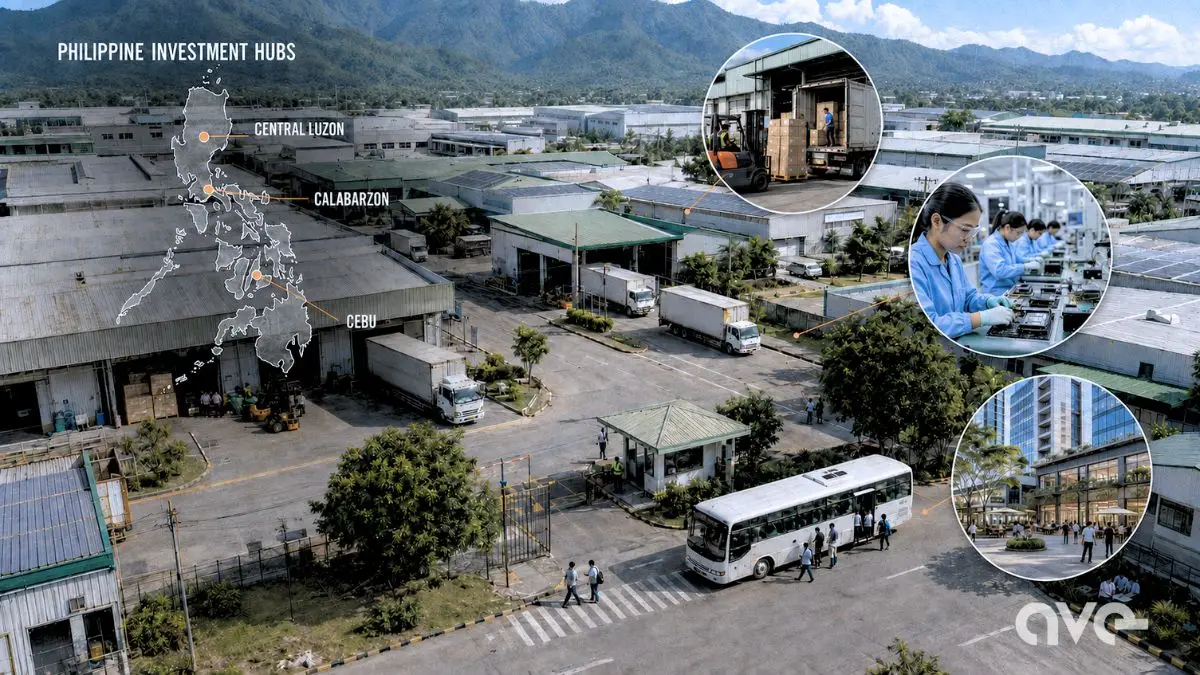
- The Philippines continues to attract international investors through established industrial zones, regional business hubs, and opportunities across multiple industries.
- Infrastructure, demographics, and economic growth support long-term investment opportunities.
- Local partnerships remain critical for navigating the Philippine business landscape.
- Cross-border collaboration is becoming increasingly important in regional development.
The Philippines remains an important investment destination in Southeast Asia, supported by its large consumer market, young workforce, strategic regional location, and expanding network of economic zones and industrial hubs. These advantages create opportunities across manufacturing, renewable energy, infrastructure, technology, real estate, logistics, and hospitality.
However, successful cross-border investment in the Philippines requires more than identifying market potential. International companies must also understand local regulations, evaluate project readiness, establish reliable partnerships, and develop strategies suited to the country’s varied regional markets.
Where Cross-Border Investment Is Taking Place
Cross-border investment in the Philippines is concentrated around established economic zones, industrial estates, and regional business centers. In Central Luzon, Clark Freeport and Subic Bay Freeport support international businesses in manufacturing, aviation, logistics, and trade, while Texas Instruments’ operations in Clark and Baguio demonstrate the region’s role in global semiconductor supply chains.
CALABARZON has similarly attracted international manufacturers such as Toyota Motor Philippines in Santa Rosa, Laguna and Murata Manufacturing in Tanauan, Batangas. Industrial estates such as Laguna Technopark and First Philippine Industrial Park provide access to infrastructure, suppliers, and skilled workers. In the Visayas, Austal and Tsuneishi have helped establish Balamban, Cebu as a shipbuilding center, while Mactan Economic Zone and Cebu IT Park support export manufacturing and business services.
Strategic Industries Supporting Investment Activity
Manufacturing remains a major area of international participation, as seen in the Philippine operations of Texas Instruments, Toyota, and Murata. Renewable energy is also attracting cross-border capital. The MTerra Solar project in Nueva Ecija and Bulacan, which secured investment participation from global infrastructure investor Actis, demonstrates how international capital can support large Philippine energy developments.
Infrastructure further strengthens these opportunities by connecting industrial locations with domestic and international markets. Clark International Airport, Subic Bay, Batangas Port, and the developing Luzon Economic Corridor illustrate how suitable locations, transport access, skilled workers, and strong local partnerships influence investment decisions.
The Importance of Strategic Local Partnerships
Entering a new market involves more than financial investment. Businesses must understand local regulations, market conditions, cultural considerations, and operational requirements to successfully establish long-term operations.
Strategic local partners help bridge these challenges by providing market knowledge, facilitating business relationships, and supporting project development from planning through implementation. This collaborative approach reduces uncertainty while improving decision-making throughout the investment process.
Looking Beyond Capital
Cross-border investment is increasingly driven by collaboration rather than capital alone. Businesses are seeking partners who understand local markets, recognize emerging opportunities, and can help align investment objectives with long-term regional development.
As the Philippine economy continues to evolve, successful investments will increasingly depend on combining international expertise with local knowledge, creating partnerships that generate value for both investors and the communities they serve.
A growing economy, expanding infrastructure, strategic location, and diverse business opportunities continue to make the Philippines an attractive investment destination.
Manufacturing, renewable energy, infrastructure, logistics, technology, hospitality, and business services continue attracting local and international participation.
Experienced local partners help investors navigate regulations, understand market conditions, and develop strategies suited to the Philippine business environment.
Whether you’re entering the Philippine market, expanding your business, or pursuing new investment opportunities, AVE Group brings together the right partners, expertise, and strategic support to turn ideas into sustainable ventures.