
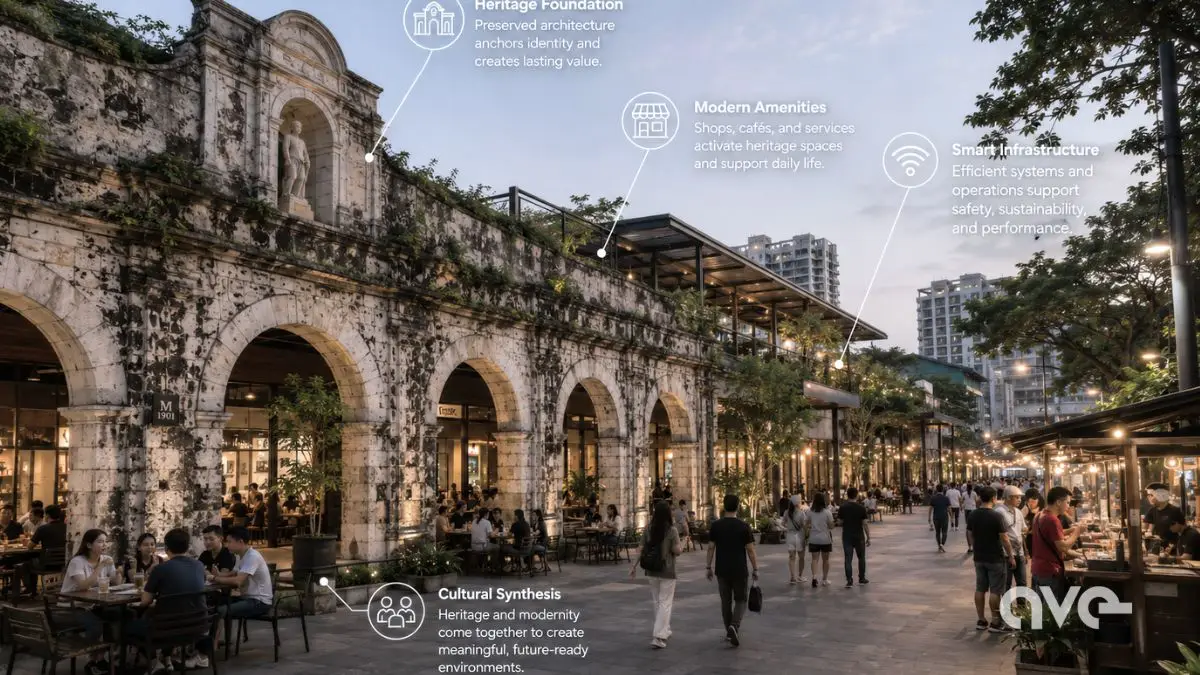
- Modern development in the Philippines is evolving into a fusion of cultural identity and futuristic innovation.
- Integrating local heritage with AI managed infrastructure creates high value landmark assets.
- Cultural synthesis increases both aesthetic and economic value in residential and commercial developments.
- Futuristic design ensures heritage inspired projects remain relevant in the digital economy.
- Iconic landmarks act as cultural anchors that drive long term land appreciation.
The landscape of contemporary property development in the Philippines is reaching a pivotal moment where the past and the future converge to create unprecedented value. For the global investor, the most compelling opportunities no longer lie in generic glass towers that could exist anywhere in the world. Heritage inspired real estate in the Philippines is evolving through the integration of futuristic design, creating assets that resonate with both local identity and global expectations of modernity.
In major markets such as Metro Manila and Cebu, as well as emerging hubs across the Visayas, this architectural direction is becoming a defining feature of high value developments. By combining cultural authenticity with technological advancement, developers are establishing a new standard for prestige, differentiation, and long term return on investment.
The Evolution of the Filipino Architectural Identity
Historically, Philippine architecture has been shaped by climate responsiveness and the use of indigenous materials. Traditional forms emphasized openness, natural ventilation, and a strong connection to the surrounding environment. While these elements remain valuable, modern development requires a more advanced and performance driven approach.
Today, developers are reinterpreting these traditional principles through the lens of futurism. This includes the use of modern construction materials, geometric precision, and integrated digital systems that enhance building performance. When executed effectively, this fusion creates a unique architectural identity that stands out in both local and global markets.
Projects that successfully merge heritage with modernity establish a brand identity that is difficult to replicate. In areas such as Iloilo and Taguig, buildings that reflect cultural context while embracing contemporary design attract strong demand from high value investors and tenants.
The Architect Developer as a Cultural Visionary
The success of heritage driven developments depends on the alignment between design vision and development strategy. This is where the architect developer model becomes essential. A design forward development team ensures that cultural expression and financial performance are considered simultaneously.
Every decision, from material selection to spatial planning, contributes to both the aesthetic value and the economic viability of the project. This integrated approach results in developments that are not only visually compelling but also optimized for long term asset appreciation.
In hospitality and residential sectors, this synergy creates properties that function as both high performance investments and cultural landmarks. A well designed project becomes a destination in itself, attracting attention and generating consistent demand without reliance on traditional marketing methods.
Integrating Futurism and AI within Cultural Forms
The integration of Artificial Intelligence is a key factor in transforming heritage inspired architecture into future ready assets. AI systems enhance operational efficiency while maintaining the cultural integrity of the design.
Smart technologies manage energy consumption, security, and building performance in real time. In commercial and residential settings, this results in lower operational costs and improved occupant experience. These capabilities are essential in meeting the expectations of modern tenants and investors.
By embedding these technologies into culturally inspired structures, developers create assets that balance tradition and innovation. This approach ensures that properties remain competitive as the digital economy continues to evolve.
Geographic Stages for Cultural Synthesis
The fusion of heritage and futuristic design is taking place across the Philippines. In Metro Manila, developers are incorporating modern interpretations of traditional architectural elements into high rise buildings. In Cebu, coastal developments combine local identity with advanced resort design and technology.
Emerging regions such as Iloilo and Davao offer additional opportunities for this synthesis. These areas provide strong cultural foundations alongside growing infrastructure, making them ideal for large scale, design driven projects. By entering these markets early, investors can participate in shaping the future identity of these regions.
This geographic diversity allows developers to tailor their approach based on local context while maintaining a consistent focus on innovation and long term value creation.
Asset Appreciation through Unique Cultural Value
Culturally significant architecture plays a major role in driving asset appreciation. Properties that achieve landmark status benefit from strong brand recognition and sustained demand.
A development that reflects both heritage and modernity becomes more than just a physical structure. It becomes a symbol of identity and progress, which enhances its market positioning. This leads to higher occupancy rates, premium pricing, and long term relevance.
For investors, this translates into a more secure and resilient asset. By focusing on cultural and architectural differentiation, developers create properties that maintain their value across market cycles.
The AVE Take
Bridging Filipino heritage with futuristic design represents a powerful strategy for modern real estate development in the Philippines. By combining cultural identity, technological integration, and design led execution, investors can create assets that stand out in a competitive market. Heritage inspired real estate in the Philippines offers a pathway to high value, future ready investments, ensuring long term growth and sustained demand.
It creates a unique identity that differentiates the asset and attracts premium demand.
AI enhances efficiency and user experience while supporting modern building operations.
It aligns design and financial objectives to improve overall project performance.
Yes, modern design can complement heritage by respecting context while introducing innovation.
Metro Manila, Cebu, Iloilo, and Davao are key areas for this development approach.
AVE Group Inc. provides expert consultancy and strategic management for culturally driven real estate developments across the Philippines. We connect investors with land assets, design expertise, and development partners to create landmark projects that combine heritage and innovation for long term success.