
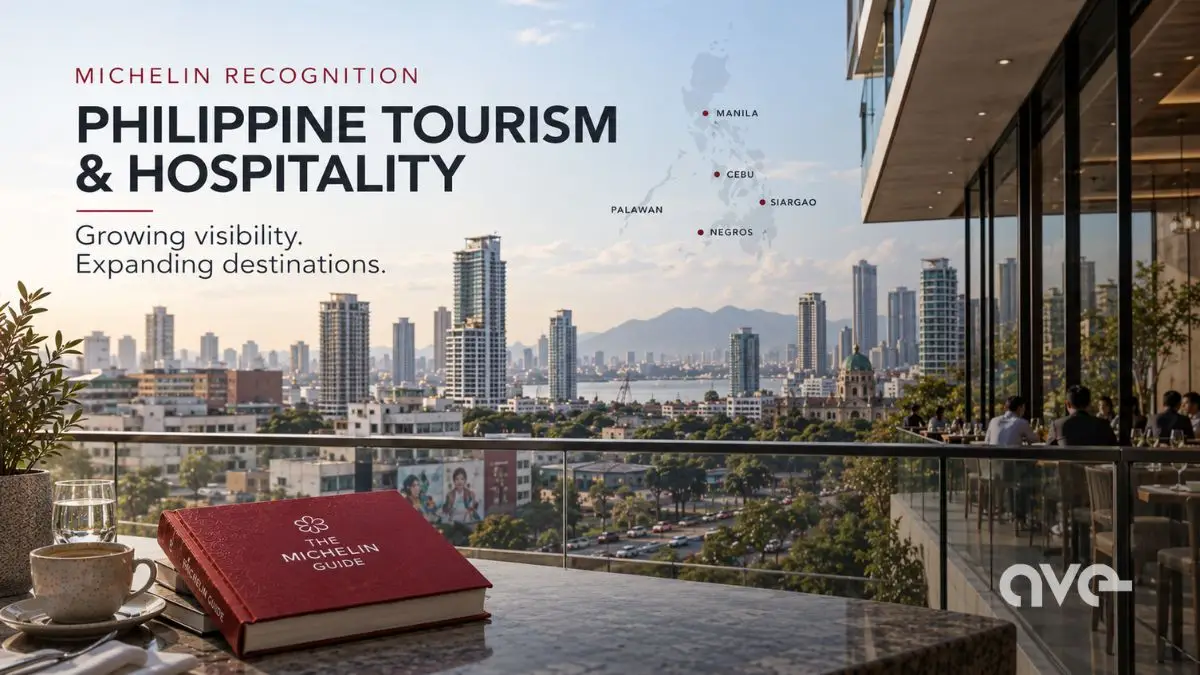
- The Philippines now has nine Michelin Key hotels in the 2026 global selection, including the country’s first two properties to receive Two Michelin Keys.
- Recognition extends across urban and leisure destinations including Metro Manila, Cebu, Palawan, Siargao, and Negros Occidental, reflecting the range of Philippine hospitality experiences gaining international attention.
- The Philippine accommodation pipeline is projected to add 45,884 hotel rooms across 213 properties through 2032, representing at least ₱387 billion in committed capital.
- Tourism growth is creating opportunities beyond accommodation, including transportation, infrastructure, food and beverage, retail, leisure, and other businesses supporting destination economies.
- Emerging hospitality investment increasingly follows connectivity and economic activity, reinforcing the importance of airports, transportation networks, infrastructure, and regional growth centers.
Michelin Recognition Puts More Philippine Destinations on the Global Hospitality Map
The Philippines is gaining greater visibility within the international hospitality market as more local properties receive recognition from the Michelin Guide.
For its 2026 global hotel selection, Michelin recognized nine hotels in the Philippines. El Nido Resorts Lagen Island in Palawan and Raffles Makati became the country’s first Two Michelin Key properties, while seven hotels received One Michelin Key distinctions. The recognized properties are located across Metro Manila, Cebu, Palawan, Siargao, and Negros Occidental.
The Michelin Key is the Guide’s distinction for exceptional hotel experiences. Its selection criteria consider architecture and interior design, quality and consistency of service, character, value, and how significantly a property contributes to its neighborhood or setting.
For the Philippines, however, the significance extends beyond the individual hotels receiving recognition.
The geographic range of the selection reflects something increasingly important about Philippine tourism: international hospitality experiences are not concentrated in only one type of destination. Makati and Pasay represent the country’s major metropolitan gateway, while Cebu combines urban and resort tourism. Palawan and Siargao demonstrate the international appeal of island destinations, while recognition in Negros Occidental expands attention toward another regional leisure market.
Together, these destinations offer different expressions of Philippine hospitality rather than a single tourism model.
Tourism Growth Creates Opportunities Beyond Individual Hotels
A successful hospitality property does not operate independently from the destination around it.
Hotels and resorts rely on airports, roads, transportation, utilities, restaurants, attractions, local businesses, cultural experiences, and the overall quality of the surrounding environment. As visitor demand develops, these interconnected systems can generate opportunities well beyond accommodation.
This is already visible in established Philippine destinations:
- Cebu combines a major international gateway with urban hospitality, Mactan’s resort market, heritage attractions, and coastal destinations elsewhere in the province. The region continues to attract hospitality investment, while international hotel brands are expected to account for a substantial share of new hotel supply across the Visayas and Mindanao.
- Palawan represents a different development model. Michelin specifically highlighted the natural setting, Filipino materials and craftsmanship, and environmental practices of El Nido Resorts Lagen Island when recognizing it with Two Michelin Keys. Here, the surrounding environment and local identity are not simply background elements. They are part of the destination experience itself.
- Siargao provides another example of the relationship between tourism and connectivity. Alongside the island’s growing international profile, government transport plans have included improvements to Siargao Airport and port connectivity serving the destination.
These examples show why tourism development can create opportunities across hospitality, transportation, food and beverage, retail, recreation, property development, local experiences, and infrastructure.
A ₱387 Billion Hotel Pipeline Shows Where Investment Is Moving
International recognition is arriving alongside substantial private-sector investment.
The 2026 Philippine Accommodation Pipeline Report by the Philippine Hotel Owners Association and Leechiu Property Consultants projects 45,884 new hotel rooms across 213 properties between 2026 and 2032. The pipeline represents at least ₱387 billion in committed capital and could create approximately 64,000 direct hotel jobs if the identified projects are completed.
Importantly, this investment is geographically dispersed.
Projects expected between 2027 and 2028 include developments across Laguna, Davao, Cebu, Metro Manila, Pangasinan, and San Vicente in Palawan. Later additions extend into destinations such as Panglao, Oslob, Siquijor, Moalboal, Siargao, Cagayan de Oro, and Davao.
This geographic spread suggests that Philippine hospitality growth is increasingly tied to multiple regional markets rather than a single tourism corridor.
It also creates different development opportunities. An urban hotel serving business and leisure travelers in Metro Manila requires a different strategy from a resort in Palawan, a hospitality development in Cebu, or an emerging tourism property in Siquijor.
Understanding those differences becomes important for investors deciding where and how to participate in the market.
Connectivity Is Becoming Part of the Hospitality Investment Equation
One of the clearest patterns in the current accommodation pipeline is the relationship between investment and accessibility.
According to the 2026 Philippine Accommodation Pipeline Report, 70% of the overall pipeline is planned near international gateways. The report also found that 42% of the national pipeline falls within the Luzon Economic Corridor, with development clustering from Clark and New Clark City through Metro Manila toward Batangas and Laguna.
This helps explain why tourism infrastructure cannot be separated from hospitality development.
A destination may have strong natural, cultural, or recreational assets, but accessibility influences whether those assets can support sustained visitor demand and investment.
Bohol provides a practical example. The expansion of Bohol-Panglao International Airport was designed to increase passenger capacity from two million annually, with further expansion expected to accommodate substantially greater traffic by 2030. The project was explicitly linked with improving access for tourists and supporting local hotel and restaurant industries.
Similar considerations apply to other destinations where airport capacity, ports, roads, public transportation, and utility infrastructure influence how easily tourism markets can grow.
For investors, this means evaluating not only the property itself but also the infrastructure and economic ecosystem surrounding it.
International Recognition Can Strengthen Destination Positioning
Michelin recognition adds another layer to how Philippine destinations can position themselves internationally.
The value is not simply the award attached to a particular property. International recognition can introduce travelers to destinations they may not previously have considered while reinforcing confidence in the quality of experiences available there.
But recognition alone does not create a successful destination.
The strongest tourism markets develop a broader identity around what visitors can experience outside their accommodation. That can include food, heritage, recreation, wellness, nature, nightlife, culture, shopping, events, or business activity.
This is where the diversity of Philippine destinations becomes an advantage.
Makati can compete through urban hospitality, business, dining, and retail. Cebu combines metropolitan activity with heritage and nearby resort experiences. Palawan builds around exceptional natural environments and island tourism. Siargao has developed an international identity around surfing, coastal recreation, and island culture.
These places do not need to offer identical experiences to participate in international tourism. Their differences are precisely what allow each destination to develop its own market position.
Destination Development Connects Tourism With the Wider Economy
As tourism expands, its economic effects can extend through multiple industries.
New hospitality developments can increase demand for construction, professional services, transportation, local suppliers, restaurants, tour operators, retail, entertainment, property services, and other businesses supporting visitors.
The scale of the current hotel pipeline illustrates why these relationships matter.
With tens of thousands of additional rooms planned across the country, hospitality development also means accommodating more employees, supplying more properties, transporting more visitors, supporting more businesses, and strengthening the infrastructure required by growing destinations.
This creates opportunities for collaboration among investors, developers, landowners, hospitality operators, local businesses, government agencies, and international partners.
It also changes how tourism investment can be evaluated. Rather than viewing a hotel as an isolated asset, investors can examine the wider destination: its connectivity, visitor economy, development pipeline, supporting industries, land opportunities, and potential for long-term growth.
Building the Next Generation of Philippine Destinations
The expansion of Michelin recognition is ultimately one indicator within a much larger Philippine tourism story.
Nine Michelin Key hotels demonstrate that hospitality experiences across several Philippine destinations are meeting standards that attract international recognition. At the same time, the country’s ₱387 billion accommodation pipeline shows that substantial private capital is being committed to future tourism capacity.
The connection between those developments is important.
International visibility can help create interest. Investment can create capacity. Infrastructure makes destinations accessible. Local businesses and experiences give visitors reasons to explore. Together, these elements determine whether tourism growth develops into a sustainable destination economy.
For the Philippines, the opportunity therefore extends beyond adding more hotel rooms.
The larger challenge is to develop destinations where hospitality, infrastructure, local enterprise, investment, culture, and the surrounding environment reinforce one another.
As more Philippine destinations enter international travel conversations, that broader approach to destination development can help convert recognition into lasting economic opportunity.
Nine Philippine hotels are included in the 2026 Michelin Key selection. Two received Two Michelin Keys and seven received One Michelin Key.
The 2026 Philippine Accommodation Pipeline Report identifies at least ₱387 billion in committed capital, covering 45,884 planned hotel rooms across 213 properties through 2032.
Yes. The development pipeline includes projects across Cebu, Davao, Palawan, Pangasinan, Bohol, Siquijor, Siargao, Cagayan de Oro, and other regional markets.
Airport, port, road, and transportation access affect how easily visitors can reach a destination and how effectively businesses can operate there. Seventy percent of the identified Philippine accommodation pipeline is planned near international gateways.
Growing destinations can create opportunities in transportation, property development, food and beverage, retail, recreation, infrastructure, professional services, local attractions, and other businesses supporting the visitor economy.
AVE Group works with international investors, businesses, and strategic partners exploring opportunities in the Philippines. As tourism and hospitality investment expands across established and emerging destinations, understanding the relationship between location, connectivity, local partnerships, supporting industries, and market positioning can help identify opportunities beyond individual hospitality projects.
Connect with AVE Group to explore destination development, hospitality investment, strategic partnerships, and business opportunities in the Philippines.