
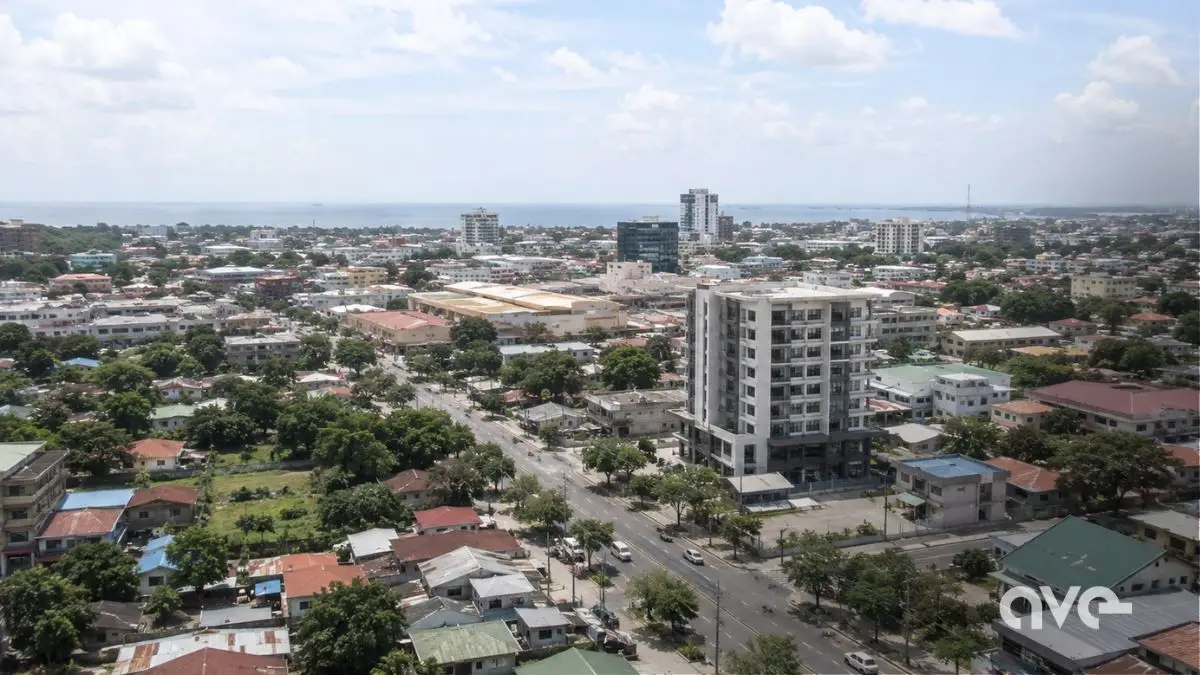
- Infrastructure projects like the North-South Commuter Railway are unlocking land value in provincial corridors.
- Regional hubs offer a blank canvas for AI integrated smart cities and modern vertical urbanism.
- Joint ventures between local landholders and global investors drive the modernization of regional skylines.
- Strategic positioning in emerging business districts provides a first mover advantage for long term capital appreciation.
The geographic focus of the Philippine real estate market is undergoing a massive shift as the limitations of Metro Manila encourage developers to look toward the horizon. While the capital remains a vital economic engine, the next phase of the country’s growth is taking place in regional hubs that are being transformed by modern infrastructure and futuristic urban planning. Regional real estate investment in the Philippines is increasingly driven by these emerging growth hubs, offering investors a unique combination of lower entry costs and higher long-term appreciation potential.
Infrastructure as the Catalyst for Regional Modernity in the Philippines
The rapid expansion of the Philippine regional hubs is fundamentally tied to the government’s commitment to modern infrastructure. Major projects such as the North-South Commuter Railway and the expansion of the Clark International Airport are not just transportation upgrades: they are economic catalysts. These developments reduce the friction of distance, making provincial locations as accessible as the traditional business districts of Makati or Taguig.
For real estate developers, this infrastructure provides the backbone for futuristic townships. In the Pampanga corridor, the synergy between the Subic-Clark-Tarlac Expressway and the new airport terminal has created a prime environment for high-tech commercial hubs and luxury residential estates. Investors are moving away from traditional, low-density builds in favor of modern, high-rise developments that utilize AI-managed infrastructure.
The Rise of the Smart City in Central Luzon
New Clark City stands as the pinnacle of futuristic urbanism in the Philippines. Unlike the organic growth of older cities, Clark is being built with a master plan that prioritizes modern technology and resilient design. It is designed to be a high-performance urban environment where AI manages everything from traffic flow to energy distribution.
The demand for office and residential space in Central Luzon is being driven by the decentralization of the BPO and tech sectors. Companies are looking for modern facilities that offer a higher quality of life while maintaining lower operational costs.
Strategic Growth in the Visayas and Mindanao
The modernization of the Philippine landscape extends far beyond Luzon. In the Visayas, Cebu continues to evolve into a sophisticated business capital. Similarly, Mindanao is seeing the emergence of Davao as a modern investment frontier, while Iloilo and Bacolod are positioning themselves as innovation-driven cities.
By focusing on modern aesthetics and AI-integrated facilities, developers in these regions are creating assets that are more competitive and resilient than traditional provincial builds.
The Advantage of the Architect-Developer in Regional Expansion
Expanding into regional hubs requires a sophisticated approach to design and development. The synergy between architectural vision and development expertise ensures projects are both efficient and high-performing.
In regional settings, iconic design becomes a key differentiator. A futuristic tower in Davao or Iloilo can quickly establish itself as a landmark, attracting premium tenants and driving higher yields.
Joint Ventures as the Vehicle for Regional Success
For global investors, joint ventures with local partners are the most effective way to access regional markets. Local landholders provide land and market insight, while international partners bring capital and innovation.
This collaborative model is accelerating the creation of modern, high-value developments across the Philippines. By prioritizing futuristic design and technology, these ventures are shaping the next generation of real estate assets.
The AVE Take
The expansion into regional growth hubs is the most significant trend in the Philippine real estate market today. Supported by major infrastructure projects, regions like Clark, Cebu, and Davao offer strong opportunities for modern development. Regional real estate investment in the Philippines represents a forward-looking strategy, allowing investors to secure high-yield assets in emerging economic centers.
It improves connectivity and increases land value, making regional hubs more attractive for investment.
It is built on a smart-city master plan with integrated technology and modern infrastructure.
They offer lower entry costs and higher potential appreciation.
They are highly beneficial for navigating local markets and scaling developments.
BPO, KPO, and tech industries seeking modern, efficient workspaces.
AVE Group Inc. highlights high-growth investment frontiers across the Philippines, providing expert consultancy on regional expansion and infrastructure. We connect investors with landholders and business networks in emerging hubs like Clark, Cebu, and Davao, ensuring strategic development and long-term asset protection.