
- Artificial intelligence is significantly reducing construction timelines and project costs through advanced generative design and predictive analytics.
- Smart property management systems use machine learning to optimize energy consumption and enhance tenant security in modern Philippine high-rises.
- Digital transformation allows investors to access real-time data for better decision-making in the competitive Metro Manila and Clark real estate markets.
- The integration of AI tools during the architectural phase ensures that buildings are future-proofed against evolving technological and market demands.
- Advanced PropTech solutions are becoming a prerequisite for attracting multinational tenants who value high-tech, efficient workspaces.
The landscape of Philippine real estate is currently experiencing a technological renaissance that is fundamentally changing how buildings are conceived, constructed, and managed. For decades, the local industry relied on traditional, manual processes that often led to project delays and cost overruns. Today, the introduction of artificial intelligence and advanced digital tools is ushering in a new era of efficiency. AI in real estate in the Philippines is driving this transformation, reshaping how developers approach construction, property management, and long-term asset performance. This shift is particularly visible in the emerging skyline of Bonifacio Global City and the sprawling developments in New Clark City. For investors, these advancements represent more than just a trend: they are a critical upgrade to the infrastructure of profit.
AI Real Estate in the Philippines and the Evolution of Construction
The impact of artificial intelligence begins long before the first shovel hits the ground. In the design phase, generative design algorithms allow architects and developers to explore thousands of potential configurations for a single site. Instead of manually sketching a handful of options, AI can process variables such as solar orientation, wind flow, and structural integrity to propose the most efficient building form. This process ensures that the resulting structure is optimized for the specific environmental conditions of the Philippines, such as the intense heat of Manila or the coastal winds of Cebu.
In the construction phase, AI-powered project management software is becoming indispensable. These tools can analyze historical data from previous builds in the region to predict potential delays or material shortages. By identifying these risks early, developers can adjust schedules and procurement strategies to keep projects on track. This level of precision is vital for large-scale joint ventures where timelines directly affect the cost of capital. Furthermore, the use of drones and computer vision on construction sites allows for real-time progress tracking. These technologies can compare the actual build against the digital twin of the project, ensuring that every element is placed with mathematical accuracy. This reduces the need for expensive rework and ensures that the final product matches the futuristic vision of the design team.
Smart Management Systems and the Occupant Experience
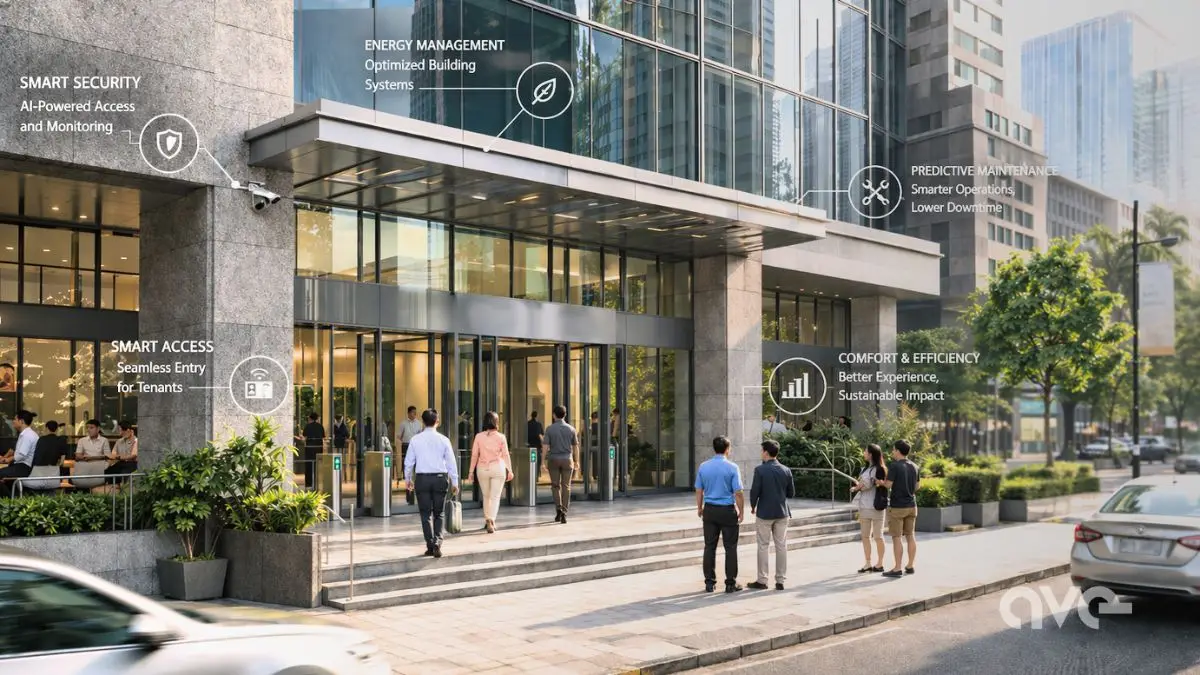
Once a building is complete, the role of artificial intelligence shifts toward property management and the optimization of the occupant experience. Modern commercial towers in the Philippines are increasingly being built with integrated smart systems that act as the brain of the structure. These systems use machine learning to understand the patterns of the building, such as when occupancy is at its peak or which areas require the most cooling. By automating these processes, property managers can reduce energy consumption by significant margins, which is a major selling point for high-end tenants in the Philippine market.
Artificial intelligence also plays a crucial role in enhancing security and safety. In the bustling districts of Makati and Ortigas, high-rise buildings utilize AI-enhanced surveillance that can detect unusual behavior or unauthorized access in real time. Biometric entry systems and automated visitor management streamline the flow of people through a building, reducing friction while maintaining a high level of security. This tech-forward approach to management is particularly attractive to multinational corporations and BPO firms that require 24/7 reliability. When a building can manage itself through a sophisticated digital interface, the operational overhead decreases, allowing for a more competitive lease structure and higher net returns for the property owner.
Bridging the Gap through PropTech Integration
The rise of Property Technology, or PropTech, is the bridge between traditional real estate and the digital future. In the Philippines, the adoption of these platforms is accelerating as developers realize the value of data-driven insights. For an investor, having access to real-time analytics on building performance, tenant satisfaction, and local market trends is a game changer. Digital transformation allows for more transparency in property transactions and management, making the Philippine market more accessible to global capital.
One of the most exciting applications of PropTech is the creation of digital twins: virtual replicas of physical buildings. These models allow owners and managers to simulate different scenarios, such as the impact of a major renovation or a change in the HVAC system, before any physical changes are made. This predictive capability is a core component of futuristic property development. It ensures that the building can adapt to the needs of the future without requiring massive structural overhauls. By investing in projects that prioritize digital integration, stakeholders are securing their place in a market that is increasingly defined by technological superiority.
The Investor Perspective on Technological Modernity
From an investment standpoint, the modernization of construction and property management is a direct path to risk mitigation. Projects that utilize artificial intelligence are less likely to suffer from the catastrophic delays that can derail a development budget. Furthermore, AI-managed buildings tend to have higher retention rates. Tenants who experience the convenience and efficiency of a smart building are less likely to move to a traditional office space. This stability is highly prized in the Philippine real estate market, where competition for premium tenants is fierce.
The move toward modernity is also a reflection of the changing demographic of the Philippine workforce. With a young, tech-savvy population, there is a natural expectation for digital integration in both residential and commercial spaces. Developers who ignore this trend risk building assets that are obsolete before they are even finished. In contrast, those who embrace AI and futuristic design are creating landmarks that will define the Philippine skyline for decades to come. The goal is to build structures that are as intelligent as they are beautiful, providing a world-class environment for businesses and residents alike.
The AVE Take
Artificial intelligence is no longer a peripheral technology: it is the core of modern Philippine real estate development. By integrating AI into construction and property management, developers are achieving unprecedented levels of efficiency and performance. This digital transformation is a primary driver for attracting global investment and ensuring the long-term viability of assets in a rapidly evolving market. AI real estate in the Philippines represents a strategic shift toward future-ready developments, offering investors a clear pathway to high-yield, resilient assets.
Generative design uses AI to test thousands of layout and structural variations in seconds, identifying the most material-efficient and cost-effective design before construction begins.
Tenants benefit from lower utility costs, enhanced security, and a more comfortable environment through automated systems.
No, AI can also be applied to residential developments and boutique projects for efficiency and personalization.
PropTech platforms provide transparent, data-driven insights into property performance and market trends.
Initial costs are typically offset by long-term savings from efficiency and reduced errors.
AVE Group Inc. leads the way in modernizing the Philippine property market through expert consultancy on digital transformation and smart management. We connect investors with the technological networks and development teams required to build efficient, AI-integrated assets. As your venture partner, we manage the integration of these systems to protect your capital and ensure long-term operational success.